Learning from Fire in the Northwoods - Event recap
Learning from Fire in the Northwoods - Event recap
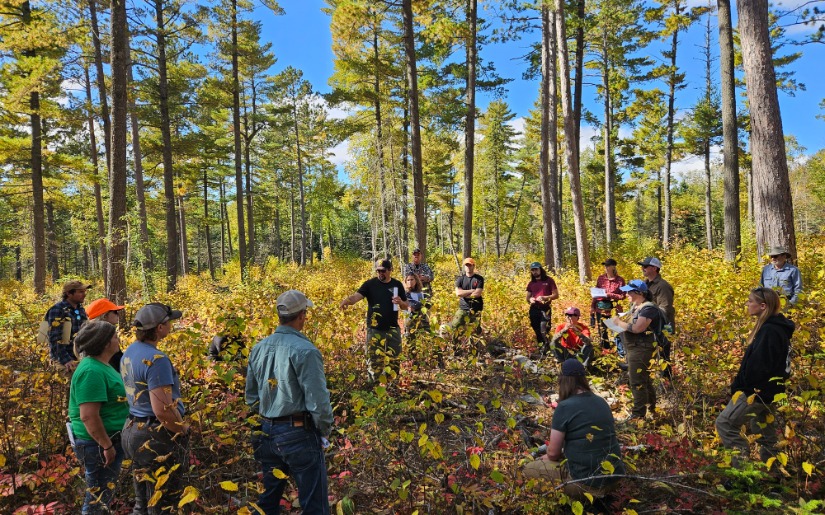
In the morning, the group visited sites of the Greenwood Fire, a wildfire that burned 26,197 acres in August of 2021, damaging 12 cabins and 57 outbuildings. Forest Service staff toured the group through two Forest Service units being managed for red pine timber. One unit had been thinned with the remaining slash left on the ground curing - here, the vast majority of canopy trees were killed in the wildfire. The other unit had received a thinning, slash pile burning, and understory burn - the majority of trees here survived, and the lower fire intensity allowed the crews a better chance to contain the fire. This comparison highlighted the importance of the multi-step process of fuel treatments to reintroduce fire into a red pine stand. Just thinning is not enough; the slash needs to be removed to prevent high intensity fire that will cause a high level of canopy tree mortality. Field trip leaders also emphasized the question: "what is the desired end state?" when making forest and fire management decisions.
The Fry Fire was a 49-acre Forest Service prescribed burn near the Little Isabella Campground that crossed over the planned burn break into an adjacent Forest Service unit, burning an additional 137 acres of Forest Service land. The Forest Service had contingency plans in place and successfully followed them - the fire was out within 24 hours, stayed on federal land, and no structures were damaged. However, the escaped prescribed fire caused backlash from the local community, highlighting the need for clear communication and transparency before and during prescribed fire operations. Lessons learned from the Fry Fire include the importance of fire practitioners planning for the adjacent fuels, values, ownership and access if the fire moves outside of the planned burn unit. Prescribed burning success increases when the landscape is able to be considered as a whole, bringing fire out to natural and suitable features, rather than artificially breaking up a contiguous forest according to property ownership lines.
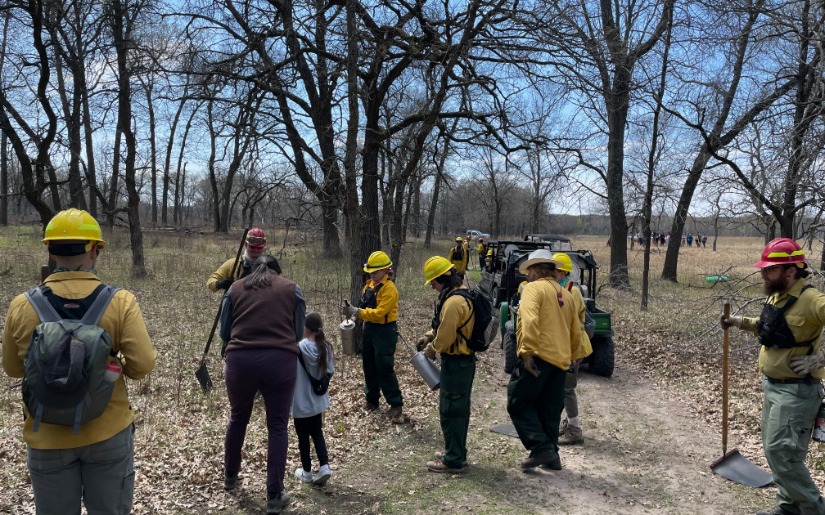
Finally, the group visited a brush disposal site where private landowners are allowed to bring small woody debris to be processed later by partnering land management agencies. Providing such opportunities for landowners to reduce their hazardous fuel loads not only helps in wildfire risk mitigation, it supports successful prescribed burning by reducing hazardous fuel loads on adjacent properties that add complexity to a burn operation. Successful fuels reduction for forest resilience from wildfire needs to be done at scale, creating a more contiguous forest landscape. Brush disposal sites have limitations and challenges, but continue to be an important resource to residents of fire-prone forests.
- Lead AuthorTeresa Floberg, Abby Andrus
- DateSeptember 2026
- CategoryEvent, Fire prevention, Fuel mitigation, Landowner, Prescribed fire